
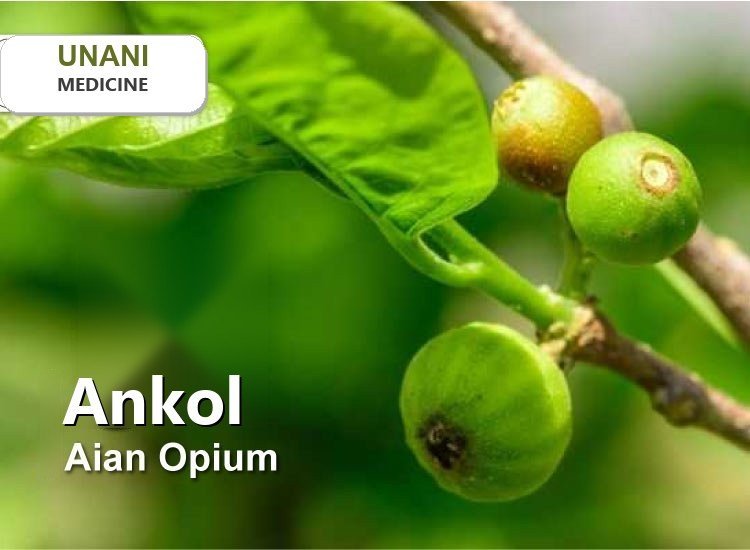
Alangium (Ankol)
Ankol (Alangium salviifolium) (Alangium) is an Indian tree whose root bark and seed oil are used as an emetic, antipyretic and antidote; it must be used with great caution.
Other Names
Urdu: Ankol. Ayurvedic: Ankol, Ankot, Kolak, Dirgha Leek Vishghan. Hindi: Ankol, Akosar, Alkod, Dhera Akola. Marathi: Ankol tree, Ankal, Ankoli. Gujarati: Aku, Ankoliya, Okla. Telugu: Akolu, Odiko, Odkhiye. Bengali: Ankot, Ankar, Dhal, Dhalakora. Kannada: Akole, Ankolaye Mara. Latin: Alangium salviifolium (Alangium hexapetalum). The source article gives the English name as “Asian opium”.
Identification
The Ankol tree is a special product of India. Like the peepal, it does not grow in any country other than India. This tree is a precious and unmatched treasure of Indian Ayurvedic science. That is why it is praised so highly in the Ayurvedic texts. Since it does not grow in any other country, its mention in Unani medicine is very rare, and so Unani physicians are less familiar with the names, properties, effects and uses of this herb.
Besides the Ayurvedic names of this herb (tree) that grows in the lap of the forest, similar names are found in other languages, which I have mentioned above. In its own way, this herb holds such strange medical properties and natural miracles that people are left astonished when they see its marvel in human society. In addition, life-giving power is hidden in every particle of it.
The word “Ankol” comes from “Ankla”, which means astonishing. So the medicinal properties of this herb leave astonishing impressions on human intellect and show the miracle of nature. There is no need to go far. You must have often seen street magicians and conjurers performing in a huge crowd, showing the spectators a dry mango stone, sprinkling water on it and in an instant making a green mango plant appear, or setting mustard on the palm of the hand and leaving people amazed. You will also often have seen such magicians stand on wooden clogs before the audience and walk without any peg or support. Have you ever thought what secret lies hidden in this trick? Come, let me acquaint you with this secret.
These conjurers or magicians keep a burnt mango stone or dry mustard seeds soaked in the oil of Ankol seeds, and when needed, in front of the crowd watching the show, by sprinkling water on the oil-soaked stone or mustard seeds, they succeed in making a swaying plant appear in the blink of an eye, and you are left astonished by the trick. The miracle in this magic trick of the conjurers is that of this God-given Indian gift, Ankol, which you take to be astonishing magic of the conjurers.
This strange Indian herb grows only in the hills of India and their foothills, but it is a wild herb. It is a priceless treasure of Bharat Varsh. It always grows in rocky, sandy and gravelly soil. From the foothills of the Himalayas to the green banks of the river Ganges, in Uttar Pradesh, Oudh and Bihar, in sandy Rajasthan, and in the sandy plains of the hilly regions of Bengal and Punjab, this herb is commonly found. It is commonly seen in Gujarat, Kathiawar and on the eastern and western coasts of India. Its trees are also commonly found in the foothills of the Shivalik range. In Kashmir, the trees are seen showing their spring beauty in meadows and on the banks of lakes and streams.
This herb is also found abundantly in the Bombay region. The people of Bombay plant it to decorate their gardens, and for the display of bungalows and mansions they plant it in pots. These pots are arranged very neatly in rows, so that beauty seems to dance in their residences.
Varieties
In the Ayurvedic texts two kinds of this herb are written: one is black Ankol and the other white, but in some texts red and yellow Ankol are also mentioned. The Ankol tree whose flowers are purple in colour and whose bark is hard and ash-coloured is called black Ankol. In contrast, the one with white flowers is called white Ankol. The only difference is that the black kind is not rare but is certainly scarce. White Ankol grows in abundance and is generally used extensively.
In some places, depending on the soil and climate, a yellowish tint is seen, and in other places Ankol with a reddish tint is seen. Therefore it is also described as the yellow and red kind, but the medicinal properties of all are the same. Every kind of Ankol is used in medicines.
Description of the tree
Ankol is a sizeable tree whose branches, like those of ordinary trees, spread and take the form of a large tree. The trees look very beautiful. The tree is twenty-five to fifty feet tall, and the girth of the trunk is up to about three feet. Its twigs are white and have no thorns; however, where leaves emerge on the twigs, small needle-like thorns form.
Its roots are not particularly spreading, nor are they bunched like the roots of ordinary trees. Rather there is one long root which reaches a short distance under the ground. Two or four branches accompany this root, but when the tree matures its roots grow and go quite deep in the ground. Its root is quite heavy. These roots spread in the form of branches, crooked and straight, within the earth and are very few in quantity.
If the root is cut crosswise, the middle part inside is brown and is perforated. Around these holes there seem to be round rings. The outer skin of the root is rough and deep khaki in colour like cinnamon, with vertical red stripes on it. The colour of the inner bark is white and soft, and a special kind of fragrance is felt in it. The taste of the bark is bitter and astringent like neem. This bark is up to one and a half inches thick. On the bark of the trunk and the bark of the twigs, where leaves emerge, small thorns form. The fragrance of the flowers of this tree is very attractive and sweet.
Ankol wood is very strong and yellowish in colour. Its middle part is light almond-coloured. A very fragrant aroma comes from it. Its leaves are long and broad. The shape and appearance of the leaves closely resemble the leaves of oleander (kaner). The leaves are lance-shaped and up to about six inches long.
But even its smallest leaf is no less than three inches. So the leaves can be three to six inches. One special feature of the leaves of this tree is that, like bael leaves, there are three leaves on a node. The upper part of the leaf is light green and the other side yellow, in which the veins and fibres of the leaves are clearly visible, crooked and straight. These fibres are often white.
When new leaves grow on the tree they are very soft and have fine hairs on them. These hairs are very soft and delicate.
At the end of winter, when new flowers appear, the leaves of this tree dry and fall from the twigs. At that time the tree, without leaves and laden with flowers, shows its attractive spring beauty and appears very pleasing and eye-catching in its unmatched beauty. In the month of Chait-Baisakh its flowers fall and then new leaves begin to appear. The taste and fragrance of the leaves have some sourness. The stalks of its leaves are smooth, small and somewhat crooked. Soft hairs also grow on them.
Its thorns are up to 1/4 inch long or slightly less. Its flowers are small, yellow and in clusters. On the soft branches of the tree, where leaves have fallen, fruits begin to form two at a time. The circumference of the flower clusters is up to six and a half inches. They have a fragrance like jasmine flowers. Each flower is oval, with six to ten petals. The flowers keep appearing at the end of winter, often from the month of Magh to Chait. The petals of the flowers are fused together at the bottom. The cluster of petals looks somewhat yellow on the outside and whitish on the inside. Fine hairs are on them too. Their circumference is four inches or a little less.
The stamens of its flowers are also somewhat strange. There are two kinds of stamens, male and female. The female is only one, but the male stamens are countless. The female is white and the male is ash-coloured. These bear pollen. Both kinds of stamens are together.
Ankol is like the soapnut (reetha) or wild jujube. The circumference of its fruit is less than one and a half inches. The fruit is smooth and round. These fruits form and ripen from Baisakh to Sawan. When the fruits ripen their colour is green, and the skin of the fruit generally has stripes. The taste of the fruit is astringent and somewhat sharp. The skin of the fruit is shiny and has a sticky moisture on it. At the crown of the fruit there is a hole like a coconut.
The colour of the unripe fruit is purple, and its crown is hard and dry. The skin of the kernel is very soft. If the kernel is pressed a little, a mucilage like rice gruel (kanji) comes out of it. The smell of this mucilage is exactly like fish. It is delicious and sweet in taste, and if the fruit is eaten half-ripe, it has sourness and astringency.
A hard stone, somewhat flat on two sides, comes out of it. Inside the stone is the kernel of the seed. The seed is round but flat above and below. The skin of the seed is thin and almond-coloured. If the seed is peeled with a fingernail, oil comes out of it. In this oil are hidden countless medicinal properties, a marvel of nature. A voluminous book would be needed to write about the medicinal properties of this oil. My humble and weak pen is unable to write of its wonders and miracles. Which of its virtues shall I mention? Only to complete this article I will mention a few experiences that have come under my observation. I hope the lines below will be of interest to you and will add to your knowledge.
Taste
Sweet.
Temperament (Mizaj)
Hot and moist.
Dosage
Take about one gram of the powdered root bark.
Benefits
On the marble surface of the page, it is first necessary to set down the method of extracting oil from its seeds. If you get the chance, prepare it with great enthusiasm.
Take equal weights of the powder of Ankol seeds and sesame oil and mix them together. This compound will turn into a kind of mud. Then put the vessel or mortar in which this mud was made in the sun and let it dry; when completely dry, mix in sesame oil again and dry in the sun. Do this seven times.
After that, tie a cloth tightly over the mouth of a wide-mouthed glass or porcelain vessel, and spread this dry mixture on the surface of the cloth. Place on top a clean, large piece of white mica (abrak), and on that piece of mica place glowing coals of acacia wood. By the heat of the fire all the oil will filter through the cloth and collect below in the glass or porcelain vessel. Then keep this oil stored in a vial.
The oil of its seeds can also be extracted by the patal yantra (descent apparatus), but by this method there is no need to give the sesame-oil bhavana (impregnation). The colour of its oil is yellowish golden. This oil is a very useful thing.
It is written in the Ayurvedic texts that the oil of its seeds is bitter and astringent in taste. It is also sharp. This oil is a purgative. It is suitable and an unmatched antidote for inflammation, headache, vata, pitta and kapha (phlegm, black bile and yellow bile), impurity of the blood, and fearful poisons. This oil is effective for sprue (sangrahni) and diarrhoea (atisar), and purifies mercury.
The Ayurvedic sages have praised it greatly and said about this oil that it proves a swift and sure remedy for dropsy (jalodhar), toxic diseases, all kinds of fever, burning, catarrh, cold, diarrhoea (atisar), sprue, the fearful effects of poisons, white spots, leprosy (jazam), general bodily weakness, spermatorrhoea and piles, and other deadly and fearful diseases. For removing skin diseases (chambal, psoriasis and the like), Ankol oil is little less than the best physician and sympathetic friend.
From the medical point of view, the temperament of its oil is hot in the second degree. It strengthens the liver and kills worms. If it is used in excess of moderation, it produces dangerous results. Using this oil in large quantity disturbs the brain system, and the patient begins to feel a sudden distress in his condition. Sometimes the patient feels his life in danger. It is as if a distressing commotion arises throughout the body. Therefore its use must be made with great care.
If, God forbid, it has been used excessively by mistake, immediately take 3 grams of Shankh Pushpi powder, boiled in a quarter (pao) of cow’s milk and cooled, and drink it. Misri can also be added to the milk for taste. This immediately restores the patient’s condition. Shankh Pushpi is the proper and comprehensive corrective (muslih) of this oil, indeed its antidote.
Its root is hot and sharp, but its fruit is cold, strengthening and body-fattening, though it also creates heat if eaten in excess. Eating 3 grams of the powder of its root bark causes vomiting. If the full dose is not given, nausea arises instead of vomiting. Giving one to two grams of the powder of its fresh bark causes vomiting and diarrhoea without discomfort. It removes epilepsy of children.
Giving the root bark powder mixed with the leaf powder is said to remove the complaint of consumption (diq).
In pains, grinding its root in water and applying it as a paste gives relief.
Sleeping on a floor spread with its wood or leaves keeps snakes, scorpions, poisonous animals and insects from coming near. Similarly even stinging wasps and mosquitoes do not come near. It is a deadly poison for them.
Tried Remedies of Ankol
1. Giving a patient one to two grams of Ankol root powder causes loose motions, relieving disorder of the liver and urinary diseases.
2. Grinding this root in water and applying it hot with hot water on a plague bubo three or four times brings the plague to a good end. Similarly, if any kind of lump or tumour arises in the body, applying a hot paste of its root in the above way gives immediate relief.
3. Grind its root in lemon juice to make a thick paste, and giving half a spoonful half an hour before meals, morning and evening, removes the complaint of asthma (difficulty in breathing).
4. Ankol bark, mustard seed (rai) and garlic, six grams each; grind very fine and mix together. Mix in an amount of three-year-old jaggery equal to the weight of the mixture and make small pills the size of urad lentils. First give the asthma patient milk and have him swallow a pill, or the patient may swallow the pill along with milk. By swallowing a few pills, asthma of many years’ standing will run away with its tail between its legs. In some cases, giving two or three bigger pills makes the patient vomit and all the phlegm is expelled, and the patient gets rid of the disease for good. During use the patient should be given plenty of ghee and rice as food, but great caution is needed in this treatment.
5. Dissolving 5 to 8 grains of Ankol root powder well in water and giving it to drink brings sweating and the fever comes down. This powder should be passed through fine cloth (kapra-chhan). It is extremely useful for seasonal fevers.
6. Grind one gram of Ankol root with 1/2 gram of dry ginger very fine and cook it with rice washings to prepare a decoction. Giving this decoction in sips relieves catarrh and cold.
7. If a poisonous snake has bitten someone, grind 25 grams of Ankol root very fine and boil it in two kilos of water. When 125 grams of water remains, giving 25 to 50 grams of this decoction mixed in warmed cow’s ghee every fifteen minutes causes vomiting or diarrhoea and the poison of the snakebite leaves the body.
After the poison is expelled, continuing for a week, give daily morning and evening a boiled preparation of 1.5 grams of the inner bark of neem and powder of Ankol root; the snake poison is thoroughly expelled and the patient’s life is saved.
8. Give one gram of Ankol root powder with water; this will remove intestinal worms.
9. Ankol root bark one gram, black pepper 1/2 gram. Make a powder and give with water; it is useful for piles. (Hakeem Hirday Narayan Sharma Dilgeer)
Modern Research on Ankol (Ankot)
Dr. Mudeen Sharif says that the root of Ankol is useful in a quantity of 50 grains. Experiments have shown that when used in less than this quantity it reduces fever. It is very potent. It is beneficial in removing skin diseases (leather diseases) when used for many days. In the diseases in which ipecacuanha is used, Ankol root has proved good. Using the powder of its root brings sweating and the severity of fever goes away.
Along with this, chills and headache are also relieved. It is also useful in removing toxic diseases and leprosy. When used in large quantity it causes vomiting, which results in fatigue and weakness. In addition, its use benefits the heart and the vessels that carry blood, which lowers blood pressure; that is, it is useful in high blood pressure.
Colonel Chopra has done considerable research on this drug. A poultice of Ankol leaves is used to relieve joint pain. An oil made from its root bark gives much benefit and relief when massaged in arthritis. Boiling its leaves and tying them on the testicles relieves the complaint of fluid in the testicles (hydrocele).
Kushtas (Calcined Preparations) Made from Ankol (Ankot)
Kushta Para (mercury)
Put purified mercury in a mortar, add Ankol juice and grind well. When the mercury is well mixed, add an equal weight of purified sulphur, grind well and dry. Now close it in a clay pot and seal it with three kilos of rags dipped in clay (kapad-mitti). When dry, protect it from air and give the fire of thirty kilos of dung cakes for four pahar. In this way the mercury will become ash. When cool, take it out. It will be Para kushta. Dose: one rice grain in cream or butter.
It is useful in weakness before marriage and after marriage. During use, avoid oily and sour things.
Kushta Tanba (copper)
Make a hole in a thick root of Ankol, place purified copper in the middle, wrap Ankol bark over it, seal it with clay-soaked cloth, dig a pit and give the fire of forty kilos of dung cakes. When cool, take it out. White copper ash will be ready. Keep and use.
Dosage
One rice grain with cow’s butter. It is extremely useful in weakness before and after marriage.
Kushta Haratal Warqi (orpiment)
Grind purified foliated orpiment (haratal warqi) in Ankol oil and make a tablet. Fill a pot with the ash of peepal bark, put the above tablet in the middle, and fill with ash again in the same way. Now give it the fire twelve times. In this way an excellent kushta of orpiment will be prepared. Dose: one ratti in butter. It is useful in toxic diseases, chronic fever and leprosy.
Source: Encyclopedia of Herbs, by Hakeem Dr. Hari Chand Multani.
Ankol (Asian Opium): Further Description
Other Names
Marathi: Ankol. Hindi: Akola. Bengali: Karkanta. Gujarati: Onkla. Telugu. Sanskrit: Angola. English: Alangium.
Description
An evergreen small tree whose leaves resemble peach leaves, with fine stripes on them like betel leaves. The flowers come at the start of summer, and in May and August clustered fruits like those of the bakain appear. All parts of this tree smell like fish.
Colour
Green or brown, while the flower is yellow.
Taste
The fruit is sweet and the bark is bitter.
Habitat
Found in the forests of South India and Burma.
Temperament (Mizaj)
Hot and moist in the second degree.
Actions and Uses
The root bark is an emetic (muqayyi), sudorific (mu’arriq), antipyretic, laxative, killer of intestinal worms and heart tonic. It removes the disorder of wind and phlegm. The juice of its leaves, or the root ground, is useful for swellings and swellings caused by animal bites. Taking the root bark powdered with black pepper is useful in leprosy, syphilis and skin diseases. The fruit of this tree is a constipating (muqa’idi) and cooling tonic. It is beneficial in bleeding, tuberculosis and burning of the body. Oil is extracted from its seeds, which is used for burning (lamps). Its leaves are used as a poultice.
Side Effects
It is an emetic.
Chemical Analysis
Besides potassium chloride, a bitter alkaloid is found in it, which is certainly useful in skin diseases and is an expectorant, sudorific and laxative.
Dosage
Root bark: one ratti to two ratti; as an emetic, up to three grams.
Source: Taj al-Mufradat (research on Khawas al-Adwiya), by Dr. Hakeem Naseer Ahmad Tariq.
Leave a Reply