
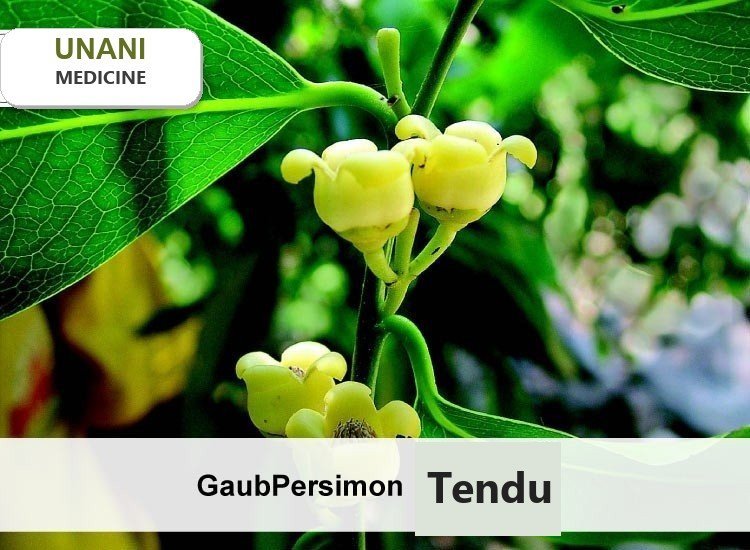
Indian Persimmon (Tendu)
Tendu (gab persimmon, Diospyros embryopteris): description, temperament, dosage, and uses of the unripe fruit as an astringent for diarrhea, dysentery, bleeding and jarayan.
Other Names
Commonly known as Tendu. Hindi: Tendu. Bengali: Gab. Telugu: Tupiki. Gujarati: Timbru. Tamil: Tumbaka. Sanskrit: Tinduk. Marathi: Tembhurni. Latin: Diospyros embryopteris. English: Gab Persimmon (persimmon tree).
Identification
It is generally found in all provinces. It grows especially abundantly in Bengal. Its tree (persimmon tree) is like the ebony tree and is tall. The fruit is the size of amla. On its head is a cap like that of a brinjal. A great deal of tannic acid is found in the rind of the fruit. The flower is white, yellowish; the fruit too in the unripe state is greenish-black and astringent, but on ripening it becomes yellowish-red and sweet. The leaves of this tree resemble the leaves of mahua. The bark is brown. The tree remains green the whole year. Boatmen mix its pulp with flax (san) to stop up the holes of boats. There are 8 to 10 seeds. Monkeys eat the fruits a great deal.
Temperament (Mizaj)
The unripe fruit is cold and dry in the second degree.
Dosage
5 grams to 10 grams.
Benefits
It is astringent and very useful for diarrhea and old dysentery; it stops bleeding from internal organs. Its half-ripe and dried fruits, when used, are useful for jarayan and premature ejaculation. The oil of its seeds is also given in diarrhea. Its bark is given in seasonal fevers. When there are sores in the mouth, gargles are made with a decoction of the fruits. Its juice is applied on boils and injuries.
Diarrhea
Using 5 grams of powder of unripe tendu (persimmon tree) in the morning and 5 grams in the evening with water stops bloody diarrhea.
Jarayan and Premature Ejaculation
Make a powder of the half-ripe fruits of tendu and give 5 grams in the morning and 5 grams in the evening, an hour and a half after eating, with water. Relief will come.
Encyclopedia of Herbs by Hakim and Dr. Hari Chand Multani
Tendu (persimmon tree)
Other Names
In Bengali Gab, in Sanskrit Tinduk, in Hindi Temru.
Description
It is the fruit of an extremely tall wild tree of a kind of ebony, which is the size of amla and has a cap on its head like a brinjal. The unripe fruit is blackish-green in color and astringent in taste, and when ripe the color becomes yellow with a reddish tinge and the taste becomes sweet. The flower is whitish-yellow and its leaves resemble the leaves of mahua. Inside the fruit there are four stones, like custard apple (sharifa), mixed with pulp.
Habitat
It grows abundantly in Malwa.
Temperament (Mizaj)
The unripe fruit is cold and dry, the ripe fruit is moderate; Hakim Kabiruddin also gives the unripe fruit as cold and dry and the ripe fruit as moderate.
Uses
The powder of unripe tendu (persimmon tree), alone or with suitable medicines, is given to stop diarrhea and to remove jarayan, thinness of semen and premature ejaculation. It is astringent and styptic (habis-ud-dam). The powder or decoction of the unripe fruit is useful in chronic dysentery and in bleeding from internal organs.
Special Benefit
Thickens semen.
Side Effects
For the stomach and intestines.
Corrective (Muslih)
Milk and oil.
Substitute (Badal)
Dried katth jamni.
Chemical Constituents
Tannic acid is found abundantly in its rind.
Source: Taj-ul-Mufradat (Research) Khawas-ul-Adwiya, by Dr. and Hakim Naseer Ahmad Tariq.
Leave a Reply