
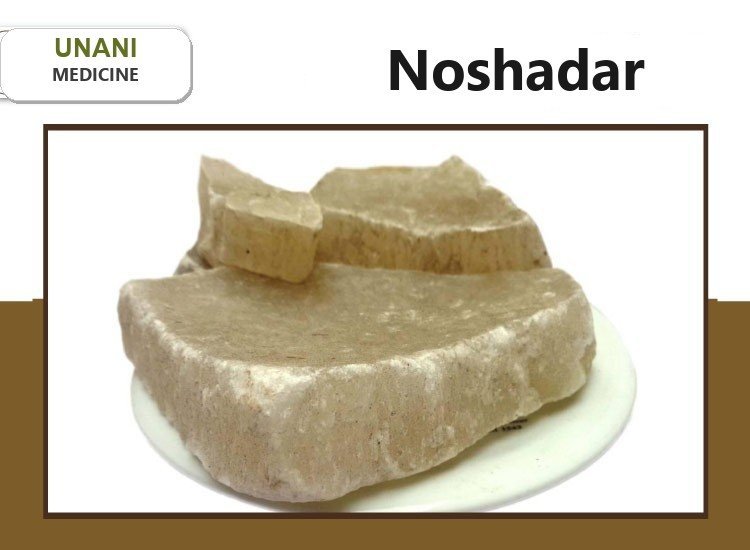
Ammonium Chloride (Noshadar)
Buy Noshadar at Ajmal Dawakhana
Noshadar (ammonium chloride, NH4Cl) is a dry mineral salt used in Unani medicine mainly for cough, phlegm, digestive and liver complaints.
Noshadar goes by different names in different languages: in Arabic it is called Milh al-Nar, in Sanskrit Narsadar, in English Ammonium Chloride, in Hindi Nausadar and in Bengali Nishidal. Ammonium chloride is also known as sal ammoniac or the salt of ammonia, and it is sometimes called hydrogen chloride salt of ammonia because it is a salt of ammonia and hydrochloric acid. Its chemical formula is NH4Cl. It generally forms when coal dumps burn and the gases released from the coal condense, so it can also be considered a natural mineral.
Temperament (Mizaj) of Noshadar
The temperament of Noshadar is dry in the third degree. It has been used in Unani medicine for many ailments for centuries, and it is mixed with various herbs in formulas. It has a strong action. It is a colourless crystalline substance, or one can say white in colour. It dissolves in water and forms a slightly acidic solution. Commercially, ammonium chloride is also used as a nitrogen fertiliser for crops.
Dosage
The usual dose ranges from two ratti or four ratti up to one masha.
Uses of Noshadar
Noshadar is a special remedy for winter-season illnesses, so it is a key ingredient in winter medicines. Because of its effectiveness it is commonly included in cough remedies. It helps clear the moisture (secretions) of the lungs and is used as a medicine for this purpose.
Medicinal Benefits of Noshadar
It is extremely useful in catarrh (nazla). Sniffed together with lime (chuna), it opens a blocked nose in catarrh and brings relief. It is also an antidote to poison. It is useful in liver and stomach disorders and in the body’s metabolic (chemical) reactions. It expels phlegm from the chest and is used only in very small amounts. It is also a diuretic. It is an excellent remedy for phlegmatic cough and asthma, and is useful in some eye diseases. With regular use it helps pass stones of the bladder and kidney, though it is effective only when used in moderation. It is also used in antibiotic preparations. It removes excess body fat and lowers cholesterol. It has excellent digestive properties and a pleasant taste, which is why it is part of digestive formulas.
For this reason it is very useful in indigestion and liver disorders. It relieves the rattling in the chest, expels the body’s bad fluids and brings comfort. In jaundice, taking it with water is beneficial. It relieves weakness of the stomach and weakness of the liver and is useful in stomach and liver diseases. It is also a resolvent of swellings (muhallil awram), and is prescribed in formulas for the treatment of itching.
Precautions
First, never use Noshadar in large amounts. Second, avoid it if you are allergic to it. During pregnancy it is better to use it with caution. Excessive use can cause allergy-like reactions such as asthma, may affect kidney function, and can cause nausea.
Leave a Reply