
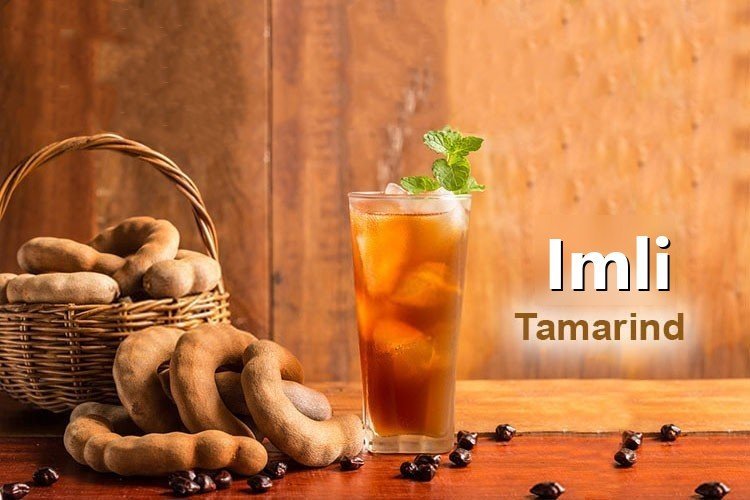
Tamarind (Imli)
Imli (Tamarindus indica) (tamarind) is a cooling, bile-purging fruit pulp whose drink soothes fever, thirst, nausea, vomiting and heat, while the seed kernel is used for spermatorrhea and nocturnal emission.
Other Names
Urdu: Imli (tamarind), Ambli. Persian: Tamr Hindi. Arabic: Khayara. English: Tamarind. Latin: Tamarindus indica Linn.
Identification
Tamarind trees are found throughout India and the neighbouring countries. The kernel found inside the tamarind seed is used as medicine. The pulp of the tamarind is also used in medicines.
Temperament (Mizaj)
Cold and dry.
Dosage
Tamarind seed kernel 4 grams; pulp as appropriate; and tamarind syrup 50 grams to 80 grams.
Benefits
It is a sedative, a purgative of bile (safra) and astringent. Besides stopping vomiting and nausea, it relieves heat of the blood and palpitation. It is beneficial in cold-related dizziness (dawran) and epidemic diseases. Its flowers are astringent. The kernel of the seed is used to relieve spermatorrhea (jaryan), nocturnal emission (ihtilam) and thinness of semen. A decoction of the leaves is beneficial in diphtheria-like throat conditions (khanaq).
The following constituents are found in tamarind: 1. tartaric acid and potassium tartrate, 2. citric acid and other similar acids, 3. sugary constituents.
Tamarind water, commonly called imli ka pana, is given in fevers and in excessive thirst.
Tamarind is used in lentils (dal), vegetables and chutney. Its temperament is cold and dry, so its use is very beneficial. When blood and bile are dominant, tamarind syrup is very soothing and expels bile through the stool.
Drinking tamarind syrup in summer protects a person from the harm of the hot wind (loo). Take four or five tolas of tamarind pulp, soak it in half a kilo of water, and after three or four hours strain off the clear water, sweeten it with rock sugar or sugar and drink.
Tamarind is lighter than the plum (aloo bukhara), relieves constipation, expels bile through the stool, removes heat of the heart, and is very beneficial in indigestion, restlessness, thirst and heat of the blood. It delights the temperament. In summer its use is very beneficial for protection from the heat of the sun and the loo. Soaking it in water at night and, in the morning, adding rock sugar or sugar is useful in summer. It is harmful in cough. It irritates the throat and increases cough. It is quite harmful to the lungs. In bilious fevers, when thirst is severe because of heat and there is vomiting and nausea, giving tamarind syrup reduces the heat of the fever, stops nausea and vomiting, and if there is palpitation of the heart because of heat, that too is relieved. According to modern research, tamarind contains plenty of vitamin C, and strangely, the vitamin is found in tamarind in the green state and remains present on drying as well.
The presence of vitamin C in the diet protects against skin diseases and impurity of the blood. Vitamin C is necessary to avoid weakness of the blood and diseases of the teeth and gums.
In Bengal, Madras, Maharashtra and Orissa, tamarind juice is drunk with rice. In coastal areas, tamarind is used abundantly to protect against the effects arising from the ill effects of the humid climate, and the people there find refreshment in it.
Just as a yoghurt raita is made with pakoris and potatoes, in Delhi and UP a raita is commonly eaten made by mixing pakoris and potatoes in tamarind juice.
In Delhi and UP, tamarind pana is made and used, which is beneficial for those of a hot temperament.
Scientific Medicinal Remedies (Mujarrabat) of Tamarind
Medicine for Nocturnal Emission
Tamarind seed kernel 10 grams, white behman and red behman 10 grams each, ispaghol husk 5 grams, gum acacia 5 grams, salab misri 10 grams. Pound and sieve, mix in an equal amount of sugar, and give 6 to 9 grams morning and evening with lukewarm cow’s milk.
Medicine for Spermatorrhea (Jaryan)
Take equal weights of tamarind seed kernel, satawar, white musli, bij band, sarwali, samundar sokh, musli sunbul, taj, talmakhana, white poppy seeds, large cardamom seeds and dried singhara, make a powder, mix in an equal amount of sugar and take morning and evening with lukewarm milk.
Another
Tamarind seed kernel, jarahat and ispaghol husk, 20 grams each; satawar 40 grams; sugar 60 grams. Make a powder and give 3 grams in the morning and 3 grams in the evening with lukewarm milk.
Premature Ejaculation (Sur’at)
Tamarind seed kernel 60 grams; talmakhana, gum acacia, bij band, small cardamom, supari flower, black musli and purslane seeds, 10 grams each. Moisten everything with banyan milk, dry in the shade and make pills the size of a jujube pit (bukhoor). Take two pills in the morning and two in the evening with lukewarm milk daily.
Another
Tamarind seed kernel 50 grams, talmakhana 10 grams, rock sugar (misri kuza) 100 grams. Make a powder. Grind all the medicines with banyan milk and make pills the size of a ber (jujube). Take one pill in the evening with lukewarm milk.
From the Encyclopedia of Herbs by Hakeem Dr. Hari Chand Multani
Tamarind (Imli, Tamr Hindi)
Latin: Tamarindus indica. Family: Leguminosae
Other Names
In Persian and Arabic: tamr Hindi. In Sindhi: gada mari. In Bengali: amli. In Hindi: ambli. In Sanskrit: amlika. In English: tamarind.
Description (Mahiyat)
The tamarind tree is quite large, about seventy to seventy-five feet tall, and evergreen. The leaves are like those of amla and sirs (albizia), ten to fifteen pairs set opposite each other. The upper colour of the leaves is bluish and the underside brownish blue, and their taste is sour. In the rainy or winter season, many beautiful white and yellow flowers appear at the ends of the branches. They give off a gentle fragrance. Many people cook and eat them.
About eight years after the tree is planted, fruit begins to appear. It lasts until Magh (January-February), in the form of pods three to four inches long, curved on one side, flat in front and back, resembling the pods of acacia (babool) and whitish, but turning almond-coloured on ripening. The pod has a thin, hard shell, inside which are four to twelve seeds. Inside these pods is a reddish-blackish pulp, pleasantly sweet and slightly sour in taste. The seeds inside the pods are very smooth, shiny, flat and hard, half an inch long, round, brownish-red on the outside. When broken, a white kernel divided into two halves comes out. The pulp of the pods, the seeds, leaves and bark are all used in medicines.
Habitat
Its original home is South India. It is also found in Bangladesh, Burma, in Gujarat in India, and rarely in Punjab in Pakistan.
Use of the Tamarind Pulp
Temperament of the Pulp
Cold in the first degree and dry in the second, and moderate according to some.
Actions
Purgative of bile and of the heat of the blood, appetizer (mushtahi), digestive, laxative (mulayyin), cleanser (jali), thirst-quencher.
Uses
It is a mufarrih (exhilarant), soother of heat, laxative and cutter of bile. It gives strength to the heart and stomach. It relieves vomiting and nausea. It directly expels bile and burnt humours. It removes excessive thirst. For these purposes its syrup (imli ka sharbat) is given. Tamarind zulal (clear infusion) relieves jaundice, bilious fever, constipation, and also the intoxication of alcohol and datura. It is beneficial for palpitation and dizziness. Old tamarind pulp (one year old) is an excellent thing for the liver, stomach, intestines, intoxication (sukri) and chronic constipation.
In scabies and itching (jarb and hikka), pills are made of tamarind pulp with aloe (alva) and used. Tamarind syrup is given in summer for bilious fevers, for expelling bile and for refreshment. This syrup is commonly sold in Pakistan nowadays. See Bayaz-e-Kabeer for the recipe for making it, and avoid the market syrup, in which less tamarind pulp and more tartaric acid are used.
Note
The tamarind pulp sold in the market contains an admixture of ten percent table salt to preserve it, whereas tamarind pulp used as medicine should contain no salt.
Inferior tamarind pulp contains plenty of fibres, husks and seeds. Also, twenty-five kg of pulp should be obtained from one maund of fruit.
Tamarind Leaves
Used as a poultice, they ripen and burst boils. Giving the leaf juice quenched with iron (lohe ka bujhao) is beneficial for lack of blood, dysentery and bloody diarrhoea. Giving the leaf juice with sugar (khand) is beneficial in dysentery and bleeding piles. Taking two tolas of tamarind leaves, grinding them in a pao of water, adding sugar and drinking it relieves burning of urine. Wounds are washed with a decoction of the leaves, even if serious. In diphtheria-like conditions (khanaq) and mouth ulcers (qula’), gargling is done with a decoction of its leaves. Eating old tamarind stops the discharge of phosphate. In constipation of children, tamarind preserve or pulp is beneficial.
The salt of tamarind bark is beneficial in abdominal pain and indigestion. The ash of its burnt bark cleans utensils of every kind.
Tamarind Flowers
Tamarind flowers are used in jaundice and bilious diseases.
Special Benefit (Nafa Khas)
Sedative and purgative of bile.
Side Effects (Muzir)
Causes throat diseases and cough.
Corrective (Muslih)
Sugar and unnab (jujube).
Substitute (Badal)
Plum (aloo bukhara) and zirishk (barberry), for soothing.
Further Research (Chemical Constituents)
Tartaric acid ten percent, acid potassium tartrate eight, citric acid and other acids, glucose or sugar constituents twenty-five to forty percent, and a non-volatile oil twenty percent.
Famous Compounds
Jawarish Tamr Hindi, Jawarish Safra Shikan, Sikanjabin Tamr Hindi or Sharbat Tamr Hindi (tamarind syrup).
Tukhm Tamr Hindi, Maghz Tukhm Imli (Tamarind Seed Kernel)
Its description has been given above (under tamarind).
Temperament
Cold and dry in the third degree.
Actions
Astringent, retentive (mumsik), drying, (retentive of) semen.
Uses
The tamarind seed kernel alone and with other medicines is astringent and retentive, or its powder is given in spermatorrhea and nocturnal emission. For narrowing of the vagina its powder is used as a pessary. And to ripen and dissolve some swellings, a poultice of its powder is applied.
Kernel of the Tamarind Seed
The method of extracting it is to roast the tamarind seeds in a furnace (bhar) and peel them, but roasting changes its temperament, that is, increases its dryness.
Special Benefit (Nafa Khas)
For thinness of semen.
Side Effects (Muzir)
Causes constipation.
Corrective (Muslih)
Sugar or taranjabin.
Dosage
One to three masha.
Duration of Effect
For use as a medicine, tamarind a year old is considered best.
Source: Taj-ul-Mufradat (research), Khawas-ul-Adwiya, by Dr. Hakeem Naseer Ahmad Tariq.
Leave a Reply