
Skip to content

Menu

  • Home
  • Herbs
    • A
      • Aconite (Bachnak)
      • Agarwood (Oud)
      • Alangium (Ankol)
      • Almond (Badam)
      • Aloe (Musabbar)
      • Alum (Phitkari)
      • Ammonium Chloride (Noshadar)
      • Aniseed (Anisoon)
      • Arjuna Tree (Arjun)
      • Ash Gourd (Petha)
      • Ashoka Tree (Asoka)
      • Ashwagandha (Asgand Nagori)
    • B
      • Bacopa (Jal Neem)
      • Bamboo (Baans)
      • Barley (Jau)
      • Behen Root (Behman Surkh o Safaid)
      • Belleric Myrobalan (Bahera)
      • Blepharis (Utangan)
      • Bristly Luffa (Bindal)
      • Bullet Wood (Maulsari)
    • C
      • Camel Thistle (Oont Katara)
      • Camel Thorn (Jawansa)
      • Cannabis (Bhang)
      • Carom Seeds (Ajwain)
      • Castor Plant (Arand)
      • Catmint (Billi Lotan)
      • Celery Seeds (Ajmod)
      • Chamomile (Babuna)
      • Citron (Bijora)
      • Clerodendrum (Arni)
      • Colocynth (Tumma / Indrayan)
      • Cotton Seed (Banola)
      • Country Mallow (Beej Band)
      • Croton Seeds (Jamal Gota)
    • D
      • Dodder (Aftimoon / Akas Bail)
    • E
      • Ebony (Aabnoos)
      • Eggplant (Baingan)
    • F
      • False Daisy (Bhangra)
      • Fig (Anjeer)
      • Flame of the Forest (Palas / Dhak)
      • Flaxseed (Alsi)
      • Fumitory (Papra / Shahtara)
    • G
      • Galbanum (Jawa Sheer)
      • Ginger (Adrak)
      • Ginger Benefits (Adrak)
      • Goosefoot (Bathua)
      • Gotu Kola (Brahmi)
      • Gum Ammoniacum (Ushaq)
    • H
      • Hemp (Bhang)
      • Henbane (Ajwain Khurasani)
      • Hibiscus (Gul-e-Gurhal)
      • Himalayan Birch (Bhojpatr)
      • Holy Basil (Tulsi)
      • Hygrophila Seeds (Talmakhana)
    • I
      • Indian Atis (Atees Talkh)
      • Indian Bay Leaf (Tez Pat)
      • Indian Birthwort (Ishar Mool)
      • Indian Gooseberry (Amla)
      • Indian Jujube (Ber)
      • Indian Kudzu (Badari Kand)
      • Indian Kudzu (Badari Kund)
      • Indian Persimmon (Tendu)
      • Indian Sarsaparilla (Anant Mool)
      • Indian Trumpet Tree (Arlu / Shivnak)
    • J
      • Jalap Root (Jalapa)
      • Java Plum (Jamun)
    • L
      • Larkspur (Jadwar)
      • Lavender (Ustukhudus)
      • Long Pepper (Pipli)
    • M
      • Mace (Javitri)
      • Maidenhair Fern (Parsiyaoshan)
      • Malabar Nut (Bansa / Vasaka)
      • Mango Ginger (Aamba Haldi)
      • Marking Nut (Bhilawa)
      • Mica (Abrak)
      • Mint (Pudina)
      • Miswak Tree (Peelu)
      • Mustard (Sarson)
    • N
      • Nalta Jute (Bahu Phali)
      • Nepeta
      • Nutmeg (Jaifal)
    • O
      • Okra (Bhindi)
      • Onion (Pyaaz)
      • Opium (Afeem)
      • Orris Root (Irsa)
    • P
      • Papaya (Papita)
      • Pearl Millet (Bajra)
      • Peppermint (Pudina)
      • Persian Lilac (Bakain)
      • Persian Manna (Taranjabin)
      • Pigeon Pea (Arhar)
      • Pistachio (Pista)
      • Pointed Gourd (Patol)
      • Polypodium
      • Polypody (Besfaij)
      • Poppy Husk (Poost Koknaar)
      • Portia Tree (Paras Peepal)
      • Prickly Chaff Flower (Puthkanda)
      • Prunes (Alu Bukhara)
      • Psoralea Seeds (Babchi)
      • Psyllium Husk (Ispaghol)
      • Punarnava (Bishkhapra)
      • Purging Cassia (Amaltas)
      • Putranjiva (Jiya Pota)
    • Q
      • Quince (Bahi)
      • Quince Seeds (Behidana)
    • R
      • Ribwort Plantain (Bartang Sabz)
      • Ridge Gourd (Tori)
      • Rocket Seeds (Taramira)
      • Rockfoil (Pathri Tor)
      • Round Gourd (Tinda)
    • S
      • Sacred Fig (Peepal)
      • Saffron (Kesar)
      • Salep Orchid (Salep Misri)
      • Sappan Wood (Patang / Baqam)
      • Sesame Seeds (Til)
      • Sickle Senna (Panwar)
      • Silver Fir Leaf (Talispatar)
      • Snap Melon (Phoot)
      • Sorghum (Jowar)
      • Spinach (Palak)
      • Sweet Violet (Banafsha)
      • Syrian Rue (Harmal / Espand)
    • T
      • Tamarind (Imli)
      • Tamarisk (Jhao)
      • Taro (Arvi)
      • Tellicherry Bark (Indarjo Talkh)
      • Three-leaved Caper (Barna)
      • Tobacco (Tambaku)
      • Tomato (Tamatar)
      • Trumpet Flower Tree (Padhal)
    • U
      • Uraria Picta (Prishniparni)
    • V
      • Valerian
      • Valerian (Balchhar)
    • W
      • Wallflower (Todri)
      • Walnut (Akhrot)
      • Water Coriander (Jal Dhaniya)
      • Water Lettuce (Jal Khumbi)
      • White Goosefoot (Bathua)
      • Wild Himalayan Cherry (Padmakh)
      • Willow Flower (Bed Mushk)
    • Y
      • Yarrow (Burnajasuf)
  • Introduction
  • History
  • Ajmal Khan Portfolio
  • Resources
  • Contact

Archives

  • November 2026
  • May 2025
  • July 2023

Calendar

November 2026
M T W T F S S
 1
2345678
9101112131415
16171819202122
23242526272829
30  
« May    

Categories

  • A
  • B
  • C
  • D
  • E
  • F
  • G
  • H
  • Herbs
  • I
  • J
  • L
  • M
  • N
  • O
  • P
  • Q
  • R
  • S
  • T
  • U
  • V
  • W
  • Y

Copyright Unani Medicine 2026 | Theme by ThemeinProgress | Proudly powered by WordPress

Lastest Blog
  • Blepharis (Utangan)
  • Lavender (Ustukhudus)
  • Gum Ammoniacum (Ushaq)
  • Colocynth (Tumma / Indrayan)
  • Holy Basil (Tulsi)
Unani Medicine
  • Home
  • Herbs
    • A
      • Aconite (Bachnak)
      • Agarwood (Oud)
      • Alangium (Ankol)
      • Almond (Badam)
      • Aloe (Musabbar)
      • Alum (Phitkari)
      • Ammonium Chloride (Noshadar)
      • Aniseed (Anisoon)
      • Arjuna Tree (Arjun)
      • Ash Gourd (Petha)
      • Ashoka Tree (Asoka)
      • Ashwagandha (Asgand Nagori)
    • B
      • Bacopa (Jal Neem)
      • Bamboo (Baans)
      • Barley (Jau)
      • Behen Root (Behman Surkh o Safaid)
      • Belleric Myrobalan (Bahera)
      • Blepharis (Utangan)
      • Bristly Luffa (Bindal)
      • Bullet Wood (Maulsari)
    • C
      • Camel Thistle (Oont Katara)
      • Camel Thorn (Jawansa)
      • Cannabis (Bhang)
      • Carom Seeds (Ajwain)
      • Castor Plant (Arand)
      • Catmint (Billi Lotan)
      • Celery Seeds (Ajmod)
      • Chamomile (Babuna)
      • Citron (Bijora)
      • Clerodendrum (Arni)
      • Colocynth (Tumma / Indrayan)
      • Cotton Seed (Banola)
      • Country Mallow (Beej Band)
      • Croton Seeds (Jamal Gota)
    • D
      • Dodder (Aftimoon / Akas Bail)
    • E
      • Ebony (Aabnoos)
      • Eggplant (Baingan)
    • F
      • False Daisy (Bhangra)
      • Fig (Anjeer)
      • Flame of the Forest (Palas / Dhak)
      • Flaxseed (Alsi)
      • Fumitory (Papra / Shahtara)
    • G
      • Galbanum (Jawa Sheer)
      • Ginger (Adrak)
      • Ginger Benefits (Adrak)
      • Goosefoot (Bathua)
      • Gotu Kola (Brahmi)
      • Gum Ammoniacum (Ushaq)
    • H
      • Hemp (Bhang)
      • Henbane (Ajwain Khurasani)
      • Hibiscus (Gul-e-Gurhal)
      • Himalayan Birch (Bhojpatr)
      • Holy Basil (Tulsi)
      • Hygrophila Seeds (Talmakhana)
    • I
      • Indian Atis (Atees Talkh)
      • Indian Bay Leaf (Tez Pat)
      • Indian Birthwort (Ishar Mool)
      • Indian Gooseberry (Amla)
      • Indian Jujube (Ber)
      • Indian Kudzu (Badari Kand)
      • Indian Kudzu (Badari Kund)
      • Indian Persimmon (Tendu)
      • Indian Sarsaparilla (Anant Mool)
      • Indian Trumpet Tree (Arlu / Shivnak)
    • J
      • Jalap Root (Jalapa)
      • Java Plum (Jamun)
    • L
      • Larkspur (Jadwar)
      • Lavender (Ustukhudus)
      • Long Pepper (Pipli)
    • M
      • Mace (Javitri)
      • Maidenhair Fern (Parsiyaoshan)
      • Malabar Nut (Bansa / Vasaka)
      • Mango Ginger (Aamba Haldi)
      • Marking Nut (Bhilawa)
      • Mica (Abrak)
      • Mint (Pudina)
      • Miswak Tree (Peelu)
      • Mustard (Sarson)
    • N
      • Nalta Jute (Bahu Phali)
      • Nepeta
      • Nutmeg (Jaifal)
    • O
      • Okra (Bhindi)
      • Onion (Pyaaz)
      • Opium (Afeem)
      • Orris Root (Irsa)
    • P
      • Papaya (Papita)
      • Pearl Millet (Bajra)
      • Peppermint (Pudina)
      • Persian Lilac (Bakain)
      • Persian Manna (Taranjabin)
      • Pigeon Pea (Arhar)
      • Pistachio (Pista)
      • Pointed Gourd (Patol)
      • Polypodium
      • Polypody (Besfaij)
      • Poppy Husk (Poost Koknaar)
      • Portia Tree (Paras Peepal)
      • Prickly Chaff Flower (Puthkanda)
      • Prunes (Alu Bukhara)
      • Psoralea Seeds (Babchi)
      • Psyllium Husk (Ispaghol)
      • Punarnava (Bishkhapra)
      • Purging Cassia (Amaltas)
      • Putranjiva (Jiya Pota)
    • Q
      • Quince (Bahi)
      • Quince Seeds (Behidana)
    • R
      • Ribwort Plantain (Bartang Sabz)
      • Ridge Gourd (Tori)
      • Rocket Seeds (Taramira)
      • Rockfoil (Pathri Tor)
      • Round Gourd (Tinda)
    • S
      • Sacred Fig (Peepal)
      • Saffron (Kesar)
      • Salep Orchid (Salep Misri)
      • Sappan Wood (Patang / Baqam)
      • Sesame Seeds (Til)
      • Sickle Senna (Panwar)
      • Silver Fir Leaf (Talispatar)
      • Snap Melon (Phoot)
      • Sorghum (Jowar)
      • Spinach (Palak)
      • Sweet Violet (Banafsha)
      • Syrian Rue (Harmal / Espand)
    • T
      • Tamarind (Imli)
      • Tamarisk (Jhao)
      • Taro (Arvi)
      • Tellicherry Bark (Indarjo Talkh)
      • Three-leaved Caper (Barna)
      • Tobacco (Tambaku)
      • Tomato (Tamatar)
      • Trumpet Flower Tree (Padhal)
    • U
      • Uraria Picta (Prishniparni)
    • V
      • Valerian
      • Valerian (Balchhar)
    • W
      • Wallflower (Todri)
      • Walnut (Akhrot)
      • Water Coriander (Jal Dhaniya)
      • Water Lettuce (Jal Khumbi)
      • White Goosefoot (Bathua)
      • Wild Himalayan Cherry (Padmakh)
      • Willow Flower (Bed Mushk)
    • Y
      • Yarrow (Burnajasuf)
  • Introduction
  • History
  • Ajmal Khan Portfolio
  • Resources
  • Contact
Jamun (Java Plum) – Unani herb
Written by adminNovember 25, 2026

Java Plum (Jamun)

Herbs . J Article

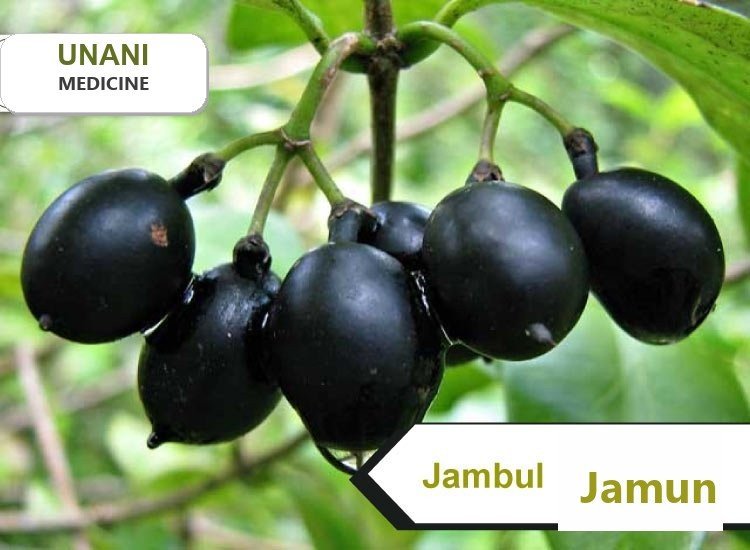
Jamun (Eugenia jambolana (Syzygium cumini)) (Java Plum, Jambul) is an astringent fruit tree whose fruit, seed kernel, leaves and bark are used in Unani medicine for diarrhea, diabetes, piles and weak digestion.

Botanical name: Eugenia jambolana (Syzygium cumini)

Other Names

Jamun. In Sanskrit Ajambur, Maha Jambur, Bhumi Jambur and Swarnamata; in Hindi Badi Jamun and Chhoti Jamun; in Tamil Naval; in Bengali Jam Gachh (Kala Jam); in Marathi Jambhul; in Gujarati Raj Jambu; in Kannada Jalur; in Telugu Neredu; in Punjabi Jamnun or Jamun; in Sindhi Jamun; in Latin Eugenia jambulena (Eugenia jambolana); and in English Jambul.

Identification

It is a well-known, tall tree, like the walnut tree, growing from 50 to 99 yards high (as given in the source). The branches spread in all directions. The leaves are a hand-span long and dark greenish in color; the blossom is white. The fruit is like a black grape but somewhat longer, purple in color. The bark is dark brown, one to one and a half inches thick. The fresh seed is light pink but turns brown when dried. The outer skin is thin and crumbly; inside is a thick, hard, wrinkled stone that splits into two parts.

In more detail: it is a well-known tree that bears fruit in summer. The fruit is famous as "jamun" and is eaten as a fruit, and the kernel of its seeds is used as medicine.

Habitat

The jamun tree is found everywhere from northern Pakistan to southern India.

Temperament (Mizaj)

Strongly dry in the second degree. The Bengali variety, Gulab Jamun, is moderate and leaning toward cold. The seed is cold and dry in the second degree. (Another source: cold and dry in the second degree.)

Actions

Stomach tonic and tonic for a hot liver, appetite stimulant, astringent, and soother of heat.

Dosage

Roasted (dried) jamun seed powder up to 3 grams; Rubb-e-Jamun (jamun syrup or inspissated juice) 25 grams to 35 grams. In modern (allopathic) medicine 5 to 10 grains; the dose of the liquid extract is 10 to 60 minims. (Another source: Rubb-e-Jamun two to three tola, and kernel of dried jamun seed three masha.)

Benefits

It is a retentive (habis) and astringent, with an astringent taste. Sweet jamun is digestive; in coldness and dryness it is beneficial for the disease of excessive urination. The large jamun is used more than the small jamun. Wild jamun is astringent, sour, tonic and produces semen. Eating too much ripe jamun is harmful to the lungs and can cause tuberculosis. Salt and dry ginger greatly reduce its harm.

One type of jamun is a substitute for another type.

A syrup or vinegar made of jamun is used to strengthen a hot stomach and liver and to create appetite. They soothe inflammation. They stop bilious and bloody diarrhea. Simply eating jamun (the fruit) gives the same benefits. Its vinegar dissolves swelling of the spleen.

Because the kernel of the dried jamun seed is astringent, it is used in diarrhea and diabetes. Making a powder of jamun seed kernel with mango kernel and roasted black myrobalan and giving it is a tried medicine for chronic diarrhea.

Gargling with a decoction of jamun tree bark is extremely useful for firming the teeth. Making charcoal from the wood of the jamun tree and using it as a tooth powder stops loose teeth and bleeding from them.

In modern medicine, too, the fluid extract of jamun has been used in diabetes. With its use, the passing of sugar in urine stops.

In Bengal it is a common practice to give diabetic patients equal parts of jamun juice and mango juice, because this removes the harm of the mango. In addition, this drink quenches thirst and serves as an excellent food.

In homeopathy, the mother tincture (Q) Syzygium is prepared from the kernel of jamun. This medicine is famous worldwide for diabetes mellitus. It corrects an increased specific gravity of urine and old wounds caused by diabetes. Give 10 or 20 drops of Syzygium (Q) four times a day. (Professor Homeo Dr. Mian Naseer Ahmad Tariq)

Modern Research

The powder of dried jamun seed kernel, or the liquid fluid-extract of jamun, is considered useful in diabetes. Further: the kernel of dried jamun contains a glycoside called jamboline, gallic acid, resin and so on, and the bark of the jamun tree contains tannin.

Note: In diabetes, its use stops sugar from coming in the urine. This is its special action; otherwise, if seen by chemical analysis, the above constituents are found in other medicines too, but those do not benefit diabetes in any way.

Special Benefit

Stops diarrhea; stomach tonic.

Side Effects

Causes flatulence and is slow to digest.

Corrective (Muslih)

Black pepper and salt.

Substitute (Badal)

The small kind is a substitute for the large.

Home Remedies and Formulas

Chronic Diarrhea

Make a powder of 10 grams of jamun seed kernel, 10 grams of roasted black myrobalan and 10 grams of mango kernel. Give two to three grams with water.

Diabetes

The powder of dried jamun seeds, 5 to 15 grains daily, given three times a day, or five grains at a time, has proved very useful. It reduces eight to ten pounds of weight and the amount of urine, and sugar decreases in the ratio of 10.42 (as given in the source).

Another Remedy

Using two drams of jamun liquid extract (rubb) three times a day is very useful in diabetes.

Bleeding Piles

Grind seven grams of jamun leaves in water, add 20 grams of rock sugar (misri) and give to drink. It is very useful for bleeding piles.

Antidote for Opium

Grind ten grams of jamun leaves in 25 grams of water and give. It removes the effect of opium poison.

Enlarged Spleen

Drinking three to seven grams of jamun vinegar is extremely useful for an enlarged spleen.

Diabetes (Compound Powder)

Take kernel of dried jamun, kernel of dried mango, kernel of dried bakayan (Melia azedarach), kernel of neem seeds, small cardamom seeds and oak galls (mazu) in equal amounts, pound and sieve them to make a powder. In the morning give three grams with fresh water.

Sharbat Jamun

Take 100 grams of squeezed jamun juice and 750 grams of sugar, and make a syrup in the usual way.

Dose: give 25 grams mixed in fresh water. In hot weather it is very useful in vomiting, nausea, diarrhea and dysentery.

Diabetes (Another Formula)

Jamun seed kernel two grams; kushta of iron (kushta faulad) two grains (one ratti); extract of shilajit (sat shilajit) four grains (two ratti); gurmar (Gymnema) 3 grams; dry ginger 8 grains (four ratti). Mix everything and make a powder. Give one such dose with milk without adding sugar. It is useful in sugar diabetes. For weak patients, divide it into two doses.

Another

Gurmar ten grams, dry ginger five grams, jamun kernel ten grams: make a fine powder of all and give three grams with milk.

Another

Opium ten grams, kushta of iron made with jamun 30 grams, kushta of hen’s egg 20 grams, dried jamun kernel 100 grams. Make a powder. Dose: a quarter to half a gram with borage distillate. It is useful for diabetes.

Another

Jamun seed ten grams and opium 40 grains, mixed well. Dose: half a gram in the morning and the same in the evening with water.

Another

Kushta of hen’s egg, kushta of iron made with jamun, and kushta of coral (marjan) with jawahar, half a ratti each. Give twice a day with cream. It is useful for sugar diabetes.

Another

Opium one part, kushta of iron two parts, jamun seed four parts; make a powder. Dose: 3 grams with fresh water.

Rubb-e-Jamun (Jamun Syrup)

Take ripe black jamuns, rub them with clean hands in a clean earthen vessel and strain through thick cloth. Boil one kilo of the juice; when 1/4 remains, add 25 grams of sugar and bring to a thick syrup. Dose: 6 grams to 10 grams with fennel distillate. This rubb is extremely useful for stopping diarrhea.

Diabetes (Gurmar Preparation)

Soak and dry 100 grams of jamun seed 21 times in a decoction of gurmar and make a powder. Add kushta of iron (made with acacia pods) and make 30 doses. Give one dose morning and evening with fresh water. It is very useful for diabetes.

Another

Grind ten grams of jamun flowers in 250 grams of water and drink without adding sweetener; it is useful for diabetes.

Another

All five parts of gurmar or only the leaf powder, three grams; dry ginger powder 1/2 gram; dried jamun kernel powder 1 1/2 grams. Make two doses. Give one dose each morning and evening with water.

Another

Take 10 jamun leaves, wash them with water, cut with clean scissors and soak in 50 grams of water for 6 hours. Then boil on the fire. When 25 grams remain, strain, add a pinch of salt and give to drink. Give such a dose morning and evening. If the sugar is high, give it three times a day. Fenugreek and bitter gourd reduce the effect of jamun, so do not give them. Do not give potatoes, rice, cauliflower and sweet things either. A daily walk of one mile is also essential. This will bring relief.

Kushtas (Calcined Preparations) Made with Jamun

Kushta Faulad (Iron)

Soak iron filings thoroughly in a decoction of jamun bark or fruit, so that the water stays two finger-widths above the filings. Place the vessel in the sun. Shake it two or three times a day. When the water dries, add more, until the hardness of the filings is gone and they become ash. Then mix with sour yogurt and cook until thick. Then seal it in a clay pot and give it the fire of ten kilos of cow-dung cakes. The kushta will be ready.

Dose: one to two ratti (two to four grains) with butter or cream. It is useful for strengthening the liver and stomach. It is a successful treatment for anemia.

Another

Mix 50 grams of jamun tree bark well in strong grape vinegar and make a paste, mix ten grams of iron filings in yogurt, and give the fire of six kilos of cow-dung cakes. Repeat the firing four or five times in this way.

It is unmatched for strengthening the liver, stomach and spleen. Dose: one ratti (two grains) with cream.

Kushta Mandur (Iron Oxide)

Quench ten grams of old mandur 25 times in strong grape vinegar, place it in a hollowed jamun root, apply a light coating of clay, and give it the fire of ten kilos of cow-dung cakes. A red-colored kushta will result.

Dose: one to two ratti (two to four grains) with cream.

It is extremely useful for weakness of the liver, jaundice and bhus (pallor).

Sources

Encyclopedia of Herbs by Hakim and Dr. Hari Chand Multani; Taj-ul-Mufradat (Research on Khawas-ul-Adwiya) by Dr. and Hakim Naseer Ahmad Tariq.

More Unani herbs

  • Jalap Root (Jalapa)
  • Larkspur (Jadwar)
  • Lavender (Ustukhudus)
  • Indian Trumpet Tree (Arlu / Shivnak)
  • Long Pepper (Pipli)

Browse all herbs starting with J or the complete A–Z list of Unani herbs.

This information comes from classical Unani texts and is for education only. Please consult a qualified hakim or doctor before using any herb, especially during pregnancy or alongside other medicines.

You may also like

Blepharis (Utangan)

Lavender (Ustukhudus)

Gum Ammoniacum (Ushaq)

Leave a Reply Cancel reply

Your email address will not be published. Required fields are marked *

Archives

  • November 2026
  • May 2025
  • July 2023

Calendar

November 2026
M T W T F S S
 1
2345678
9101112131415
16171819202122
23242526272829
30  
« May    

Categories

  • A
  • B
  • C
  • D
  • E
  • F
  • G
  • H
  • Herbs
  • I
  • J
  • L
  • M
  • N
  • O
  • P
  • Q
  • R
  • S
  • T
  • U
  • V
  • W
  • Y

Copyright Unani Medicine 2026 | Theme by ThemeinProgress | Proudly powered by WordPress